Author: admin

  • Waking Up at 3 AM? How to Sleep Better During Menopause

    Waking Up at 3 AM? How to Sleep Better During Menopause

    Do you fall asleep easily, only to wake at 3 AM wide awake, too hot or with your mind racing? You’re far from alone. Sleep problems are one of the most common complaints during perimenopause and menopause.

    In short: hormonal changes, night sweats and stress can all disturb sleep in midlife. A cool bedroom, a regular sleep schedule, less caffeine and alcohol, and getting up if you can’t sleep all help. If night sweats or insomnia continue, talk to your doctor, as effective treatments are available.

    Why menopause affects your sleep

    • Night sweats: sudden heat can wake you, often several times a night. Read more about hot flashes and how to find relief.
    • Falling progesterone: progesterone has a calming effect, so lower levels can make sleep lighter.
    • Anxiety and racing thoughts: common in perimenopause. See perimenopause anxiety: what helps.
    • Needing the toilet more often at night.
    • Snoring and sleep apnoea, which become more common after menopause.

    Why 3 AM?

    Sleep naturally gets lighter in the second half of the night. If you’re also dealing with night sweats, stress or a busy mind, it’s much easier to wake fully at this point and struggle to drift off again.

    10 ways to sleep better

    Make your bedroom work for you

    • Keep it cool: around 16–19°C (60–67°F), with a fan near the bed.
    • Use light, layered bedding and breathable cotton or bamboo pyjamas.
    • Make it dark and quiet: blackout curtains or an eye mask can help.

    Build a calm routine

    • Go to bed and get up at the same time every day, even at weekends.
    • Wind down for 30–60 minutes: dim the lights, read, stretch or take a warm (not hot) shower.
    • Put your phone away or out of reach.

    Watch what you eat and drink

    • No caffeine after midday.
    • Skip the evening wine: alcohol can trigger night sweats and wakes you later in the night.
    • Avoid big, spicy meals close to bedtime.

    If you wake in the night

    • Don’t lie there for hours. If you’re awake for more than about 20 minutes, get up, sit somewhere dim and do something calm until you feel sleepy again.
    • Try slow breathing: in for 4 counts, out for 6.
    • Keep a notebook by the bed to write down worries or to-do lists.

    Move during the day

    Daily walks, especially in morning daylight, and regular strength training can help you sleep more deeply. Try our 30-day walking plan and 4-week weight training plan. Finish intense workouts a few hours before bed.

    What about supplements?

    Magnesium is popular for sleep. The evidence is limited, but it’s generally safe at normal doses. Read our honest guide to menopause supplements before you buy.

    When to see your doctor

    Talk to your doctor if poor sleep is affecting your days, or if you snore loudly, stop breathing during sleep or wake gasping. Treatments that can help include:

    • HRT, which is very effective for night sweats and can improve sleep.
    • CBT for insomnia (CBT-I), the recommended first treatment for long-term insomnia.
    • Checking for sleep apnoea and other conditions.

    Frequently asked questions

    Why do I wake up hot at night in my 40s?

    Night sweats are a common perimenopause symptom caused by hormonal changes affecting your body’s temperature control.

    Does menopause insomnia go away?

    For many women sleep improves after the menopause transition, but it doesn’t have to wait. The habits above and medical treatment can help now.

    Is it OK to take sleeping pills?

    Sleeping pills are usually only recommended for short periods. Talk to your doctor about longer-term options such as CBT-I or treating night sweats.

    The bottom line

    Better sleep in menopause usually comes from small changes added together: a cool room, a steady routine, less caffeine and alcohol, daily movement and the right medical support when you need it. For simple habit tracking, download our free Fit After 40 Starter Kit.

    This article is for general information only and isn’t medical advice. Please speak to your doctor about ongoing sleep problems.

  • Perimenopause Anxiety: Why It Happens and 7 Things That Help

    Perimenopause Anxiety: Why It Happens and 7 Things That Help

    If you’ve never been an anxious person and suddenly feel on edge, wake with a racing heart or worry about things that never bothered you before, you’re not imagining it. Anxiety is a common, and often overlooked, symptom of perimenopause.

    In short: falling and fluctuating hormones can affect the brain chemicals that regulate mood. Simple daily habits like slow breathing, exercise, good sleep and less caffeine and alcohol can help, and so can treatment. Talk to your doctor if anxiety is affecting your life.

    Why perimenopause can cause anxiety

    During perimenopause, oestrogen and progesterone rise and fall unpredictably. These hormones influence brain chemicals such as serotonin and GABA, which help keep your mood steady and calm. When they fluctuate, many women feel more anxious, irritable or low.

    Other perimenopause symptoms can add to it: poor sleep, hot flashes, night sweats and a busy midlife full of work, family and caring responsibilities.

    Signs it might be perimenopause anxiety

    • New or stronger feelings of worry or dread, often without a clear reason
    • A racing or pounding heart
    • Feeling irritable, tense or on edge
    • Trouble switching off at night, or waking at 3 or 4am with your mind racing
    • Anxiety that gets worse before your period
    • Changes in your cycle at the same time

    Always get new heart palpitations or chest symptoms checked by a doctor, to rule out other causes.

    7 things that help

    1. Slow, deep breathing

    When anxiety rises, breathe in slowly through your nose for 4 counts and out for 6. A few minutes can calm your nervous system and ease a racing heart.

    2. Move every day

    Regular exercise is one of the best natural mood lifters. A brisk daily walk is a great start. Try our 30-day walking plan.

    3. Strength training

    Lifting weights two or three times a week supports your mood, sleep and confidence, as well as your muscles and bones. Our 4-week weight training plan keeps it simple.

    4. Cut back on caffeine

    Caffeine can trigger a racing heart and jittery feelings, especially when hormones are fluctuating. Try switching to decaf after your first cup and avoid caffeine after midday.

    5. Go easy on alcohol

    A glass of wine may feel relaxing, but alcohol can worsen anxiety the next day and disrupt sleep.

    6. Protect your sleep

    Poor sleep and anxiety feed each other. A cool bedroom, a regular bedtime and a wind-down routine can help. Read our guide to sleeping better in menopause.

    7. Talk to your doctor

    You don’t have to cope alone. Treatment options include HRT, which can help mood symptoms in perimenopause for some women, cognitive behavioural therapy (CBT) and other medicines. Your doctor can help you decide what’s right for you.

    Eat to support your mood

    Regular meals with protein, fibre and healthy fats help keep your blood sugar, and your energy, steady. Skipping meals can make anxiety worse. Our menopause diet guide shows you how.

    When to get help urgently

    If you feel overwhelmed, can’t cope with daily life, or have thoughts of harming yourself, please reach out for help straight away. Contact your doctor, call your local emergency number, or contact a crisis line: in the US, call or text 988; in the UK, call Samaritans on 116 123.

    Frequently asked questions

    Can perimenopause cause anxiety even if I’ve never had it before?

    Yes. Many women experience anxiety for the first time in their 40s, and hormonal changes are often part of the reason.

    Does perimenopause anxiety go away?

    For many women it eases after menopause, when hormones settle. In the meantime, lifestyle changes and treatment can make a big difference.

    Can HRT help with anxiety?

    It can help some women with mood symptoms during perimenopause, especially when they come with hot flashes and poor sleep. Talk through the options with your doctor.

    The bottom line

    Perimenopause anxiety is real, common and treatable. Be gentle with yourself, build small calming habits into your day and don’t hesitate to ask for support. For simple daily habits, download our free Fit After 40 Starter Kit.

    This article is for general information only and isn’t medical advice. Please speak to your doctor about your symptoms.

  • Weight Training for Women Over 40: A Simple 4-Week Plan

    Weight Training for Women Over 40: A Simple 4-Week Plan

    Weight training is one of the best things you can do for your body after 40. It helps you keep muscle, protects your bones, supports a healthy weight and makes everyday life easier. This simple 4-week plan shows you exactly what to do.

    The plan in short: 3 full-body sessions a week (for example Monday, Wednesday and Friday), 5 key moves, 30–45 minutes each. Start light, focus on good form, and make it a little harder each week.

    New to strength training? Read our gentle beginner’s guide first.

    Why weight training matters after 40

    • Muscle: we gradually lose muscle from our 40s, and the hormonal changes of perimenopause can speed this up.
    • Bones: lifting weights helps keep your bones strong as oestrogen falls.
    • Metabolism and weight: more muscle helps you manage your weight and blood sugar.
    • Mood and sleep: regular training can lift your mood and help you sleep better.

    What you need

    A pair of dumbbells (or kettlebell), a sturdy chair or bench and a mat. If you’re new, start with light weights, around 2–5 kg (5–10 lb), and increase as you get stronger. A gym works too, but it isn’t necessary.

    The 5 moves

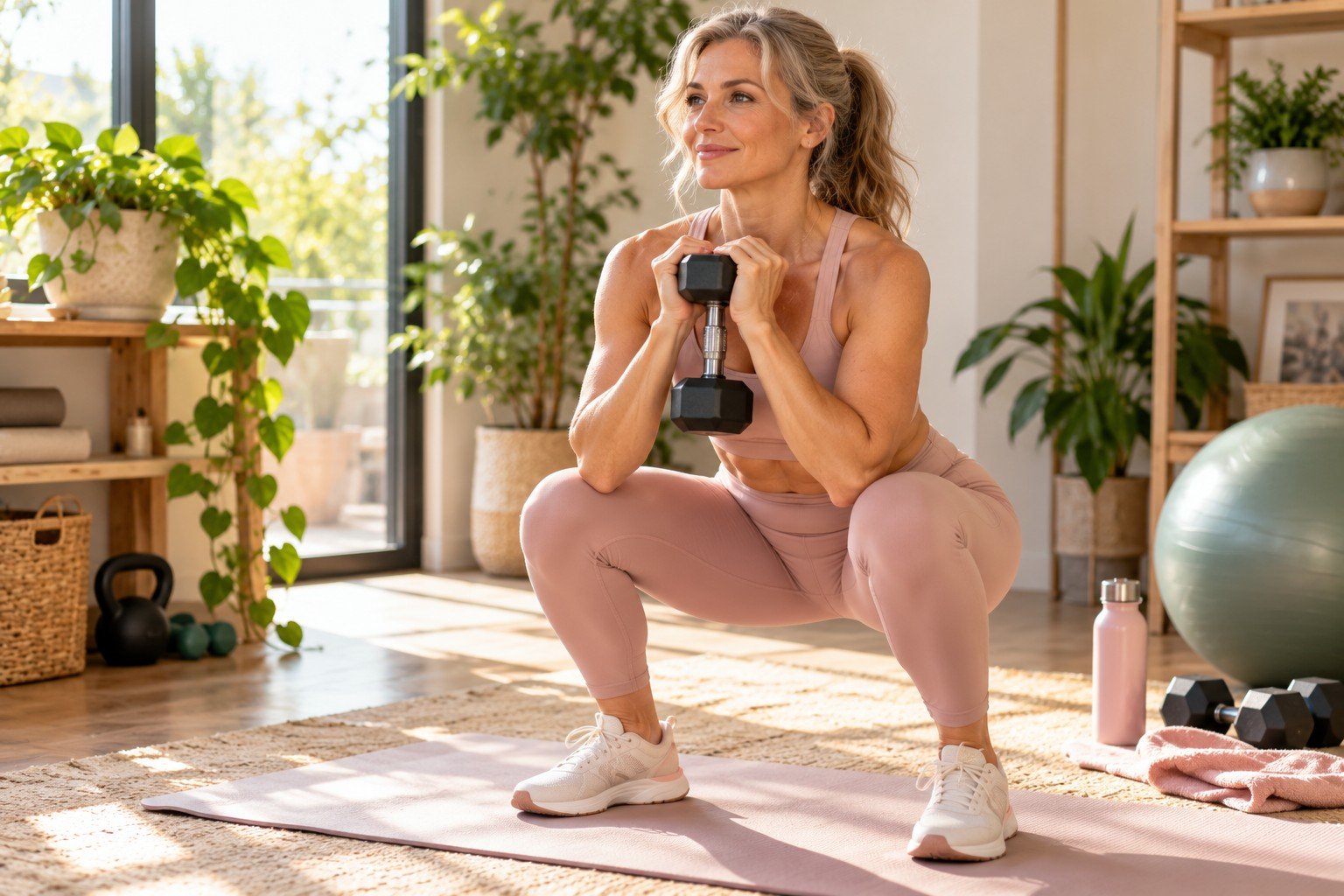
    • Goblet squat: hold one dumbbell at your chest and sit back as if into a chair. Use a real chair behind you to start.
    • Romanian deadlift: hold dumbbells in front of your thighs, push your hips back with a long, flat back, then stand tall.
    • Push-up: start against a wall or kitchen counter, then progress to a low step or the floor on your knees.
    • Dumbbell row: one hand on a bench or chair, pull the dumbbell towards your hip.
    • Reverse lunge: step back and lower gently. Hold a chair for balance if you need to.

    Warm up first with 5 minutes of brisk walking or marching on the spot, plus a few bodyweight squats and arm circles.

    Your 4-week plan

    Do all 5 moves in each session, resting 60–90 seconds between sets.

    Week 1: Learn the moves

    • 2 sets of 10 reps of each move
    • Choose a weight that feels easy to moderate. Focus on form.

    Week 2: Add a set

    • 3 sets of 10 reps of each move
    • Same weights as week 1 if your form is solid.

    Week 3: Go a little heavier

    • 3 sets of 8–10 reps
    • Increase the weight slightly on the moves that felt easy.

    Week 4: Build strength

    • 3 sets of 8 reps
    • The last 2 reps of each set should feel challenging, while your form stays good.

    How heavy should it feel?

    At the end of each set, you should feel you could do about 2 more reps, but not many more. If you could easily do 5 more, choose a heavier weight next time. If your form breaks down, go lighter.

    After week 4

    Keep going with the same 5 moves, adding a little weight or a few reps every week or two. This slow, steady increase, called progressive overload, is what builds strength over time. Every 6–8 weeks, take an easier week with lighter weights to recover.

    Tips for success

    • Eat enough protein: aim for about 25–35 g at each meal. Try these high-protein breakfasts.
    • Walk on your rest days. Our 30-day walking plan fits perfectly.
    • Track your weights in a notebook so you can see your progress.
    • Consider creatine: it can boost your results. Read creatine for women over 40.
    • Listen to your body: muscle soreness is normal at first, but sharp pain isn’t. Stop and get advice if something hurts.

    Frequently asked questions

    Will lifting weights make me bulky?

    No. Building noticeable muscle takes years of focused training. Most women find they look leaner, more toned and stronger.

    How many days a week should women over 40 lift weights?

    Two to three full-body sessions a week is ideal for most women. Even twice a week brings real benefits.

    Is it safe to start weight training at 50 or 60?

    Yes, for most women. Start light and get advice from your doctor or a qualified trainer if you have a health condition, joint problem or osteoporosis.

    The bottom line

    You don’t need hours in the gym. Three short sessions a week, five simple moves and a little patience will make you stronger in a month. For a complete, week-by-week 8-week programme with nutrition guidance, see Strong Through Perimenopause.

    This article is for general information only and isn’t medical advice. Check with your doctor before starting a new exercise programme.

  • Best Supplements for Menopause: What Actually Works (and What Doesn’t)

    Best Supplements for Menopause: What Actually Works (and What Doesn’t)

    Walk into any pharmacy and you’ll find shelves of supplements promising to fix hot flashes, belly fat, sleep and mood during menopause. Some are genuinely useful. Many aren’t. Here’s an honest, evidence-based guide to what’s worth your money.

    In short: supplements can fill real gaps, especially vitamin D, calcium (if your diet is low), protein and creatine for muscle. Most herbal “menopause blends” have weak evidence. No supplement replaces strength training, good food and, when needed, medical treatment such as HRT.

    Before you buy anything

    • Supplements aren’t regulated like medicines. Quality varies, so look for third-party testing (such as USP, NSF or Informed Sport).
    • They can interact with medicines, including antidepressants, blood thinners and blood pressure tablets. Always check with your doctor or pharmacist.
    • Food first. A supplement works best when it fills a real gap, not as a replacement for a balanced menopause diet.

    Supplements with good evidence

    1. Vitamin D

    Vitamin D helps your body absorb calcium and supports bones and muscles. Many women don’t get enough, especially in winter or if they spend little time outdoors. Ask your doctor whether you should take a daily supplement or have your levels checked.

    2. Calcium (if your diet is low)

    Bone loss speeds up after menopause. Aim to get calcium from food first: dairy, fortified plant milks, calcium-set tofu, canned fish with bones and leafy greens. If you can’t get enough from your diet, a modest supplement may help. Very high doses aren’t recommended, so ask your doctor what’s right for you.

    3. Protein powder

    Not a magic supplement, but a very practical one. Most women over 40 need more protein than they eat, and a scoop in a smoothie or oats makes it easy. Find your target in our guide: how much protein do women over 40 need?

    4. Creatine

    One of the most researched supplements in the world. Taken at 3–5 g a day alongside strength training, it can help women over 40 build strength and muscle. Read more in creatine for women over 40.

    Supplements that may help some women

    5. Omega-3 (fish oil)

    Omega-3 fats support heart health, which matters more after menopause. Studies don’t show that they reduce hot flashes. If you eat oily fish once or twice a week, you may not need a supplement.

    6. Magnesium

    Magnesium is popular for sleep and muscle cramps. The evidence is limited, but it’s generally safe at normal doses and some women find it helpful. Magnesium glycinate is often easier on the stomach.

    7. Soy isoflavones

    Plant compounds found in soy. Some studies suggest a small reduction in hot flashes for some women. Soy foods such as tofu, edamame and soy milk are an easy place to start.

    Supplements with weak or mixed evidence

    • Black cohosh: studies are mixed, and there are rare reports of liver problems.
    • Evening primrose oil: no good evidence that it helps hot flashes.
    • Red clover: results are inconsistent.
    • Ashwagandha: a few small studies on stress and sleep, but more research is needed.
    • “Menopause weight loss” blends: usually a mix of ingredients with little evidence, often at a high price.

    What works better than any supplement

    • Strength training twice a week. Start with our beginner’s guide or the 4-week weight training plan.
    • Enough protein at every meal.
    • Daily walking and good sleep.
    • Talking to your doctor about HRT or other treatments if symptoms affect your life. HRT is the most effective treatment for hot flashes and night sweats.

    Frequently asked questions

    What is the best supplement for menopause?

    There isn’t one best supplement. Vitamin D, enough protein and creatine (with strength training) have the strongest evidence for supporting bones and muscles. For hot flashes, medical treatments work far better than supplements.

    Do menopause supplements help with weight gain?

    Not on their own. Strength training, protein, fibre, walking and sleep make a much bigger difference. See what helps with perimenopause weight gain.

    Is it safe to take several supplements together?

    Often, but not always. Some combinations interact with each other or with medicines. Bring a list of everything you take to your doctor or pharmacist.

    The bottom line

    Keep it simple: food first, then targeted supplements that fill real gaps. Spend your energy on strength, protein, movement and sleep. For an easy start, download our free Fit After 40 Starter Kit.

    This article is for general information only and isn’t medical advice. Speak to your doctor or pharmacist before starting any supplement.

  • Menopause Diet: What to Eat for Energy, Weight and Strength (Plus a Sample Day)

    Menopause Diet: What to Eat for Energy, Weight and Strength (Plus a Sample Day)

    If you’ve tried eating less and less as your body changes in your 40s and 50s, you’re not alone, and you’ve probably found it leaves you tired, hungry and frustrated. The best menopause diet isn’t about restriction. It’s about giving your changing body more of what it needs.

    In short: build your meals around protein, fibre-rich plants, healthy fats and calcium-rich foods. Aim for around 25–35 g of protein per meal, fill half your plate with vegetables, and go easy on alcohol, sugary drinks and ultra-processed foods. A Mediterranean-style way of eating is a great model.

    Why your diet needs to change during menopause

    As oestrogen falls during perimenopause and menopause, several things shift at once: you lose muscle more easily, fat tends to move towards your middle, bones become more fragile and your risk of heart disease goes up. Eating well can’t stop these changes, but it can make a real difference to how you feel and how your body copes.

    The 7 building blocks of a menopause diet

    1. Protein at every meal

    Protein helps protect your muscles, keeps you full and supports a healthy weight. Aim for around 25–35 g per meal from eggs, Greek yogurt, fish, chicken, tofu, beans and lentils. Find out how much protein you need.

    2. Plenty of fibre

    Vegetables, fruit, whole grains, beans and lentils feed your gut, help control blood sugar and keep you satisfied. Most women eat far less than the recommended 25–30 g a day.

    3. Calcium and vitamin D for your bones

    Bone loss speeds up after menopause. Include calcium-rich foods such as dairy, fortified plant milks, tofu made with calcium, canned fish with bones and leafy greens. Vitamin D, from sunlight and foods like oily fish and eggs, helps your body use calcium. Ask your doctor whether you need a vitamin D supplement.

    4. Healthy fats

    Olive oil, nuts, seeds, avocado and oily fish like salmon and sardines support your heart and help you feel full. Aim for oily fish once or twice a week.

    5. Soy and other plant foods

    Soy foods like tofu, edamame and soy milk contain plant compounds called isoflavones. Some studies suggest they may slightly reduce hot flashes for some women, and they’re a great source of protein.

    6. Smart carbs

    You don’t need to cut carbs. Choose slow-releasing ones like oats, whole grains, potatoes with skin, beans and fruit, and pair them with protein to keep your energy steady.

    7. Hydration

    Drink water regularly through the day. It supports energy and digestion, and can help on days with hot flashes.

    Foods to limit

    • Alcohol: it can worsen hot flashes and disturb sleep, and adds calories without filling you up.
    • Sugary drinks and sweets: they can cause energy crashes and cravings.
    • Ultra-processed foods: crisps, biscuits and ready meals are easy to overeat and low in nutrients.
    • Very salty foods: important for heart health as your risk rises.
    • Caffeine late in the day, if it affects your sleep or triggers hot flashes.

    A simple menopause diet sample day

    • Breakfast: Greek yogurt with berries, oats and seeds (about 25–30 g protein). More ideas in our 15 high-protein breakfasts.
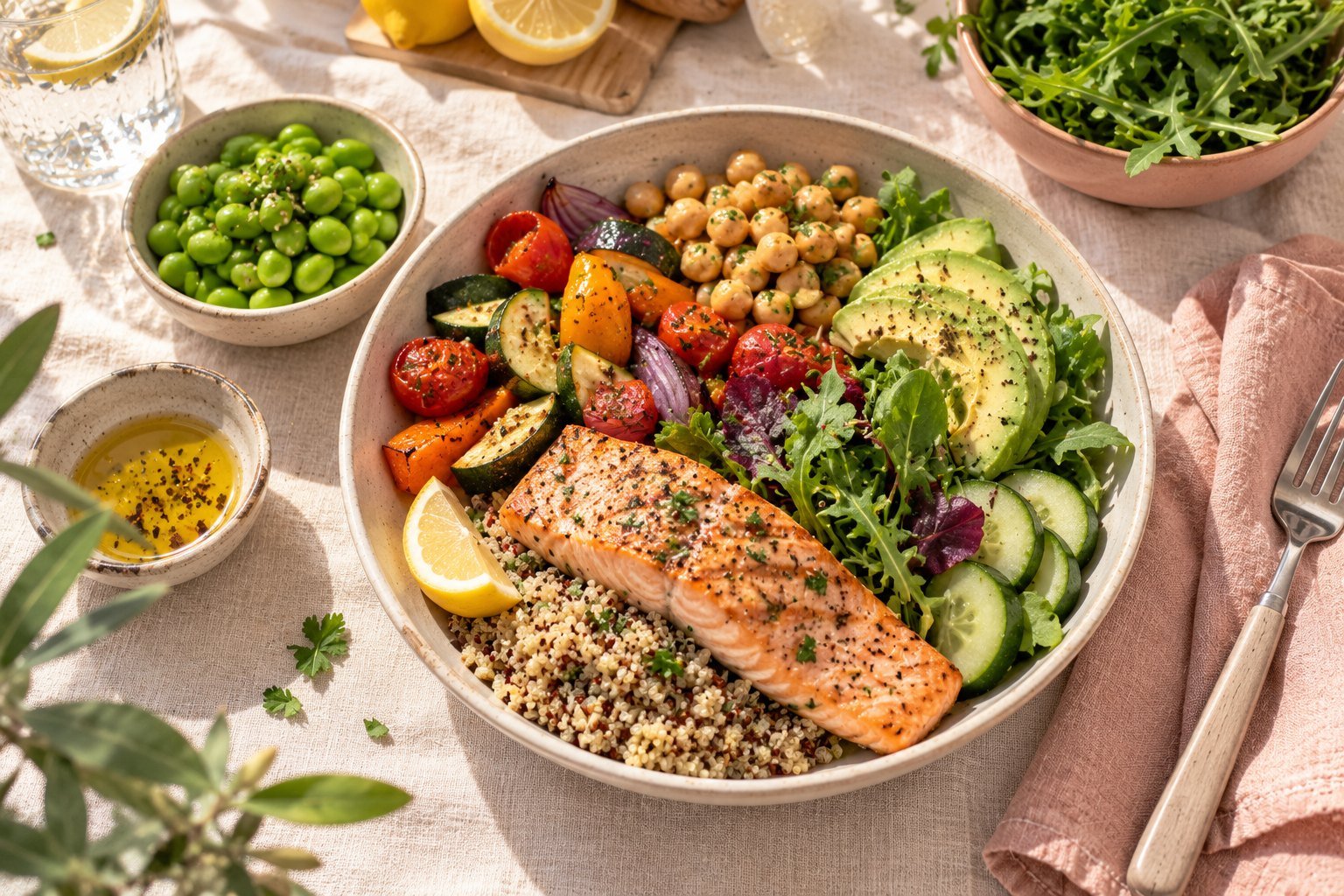
    • Lunch: a big salad bowl with salmon or chickpeas, quinoa, roasted vegetables, leafy greens, avocado and olive oil.
    • Snack: an apple with a handful of almonds, or a small bowl of edamame.
    • Dinner: chicken or tofu stir-fry with plenty of vegetables and brown rice.
    • Evening (if hungry): a glass of milk or a small pot of cottage cheese.

    Does a menopause diet help with weight?

    It can. Eating enough protein and fibre helps you feel full on fewer calories, while protecting your muscles. Combine it with strength training, daily walks and good sleep for the best results. Read more about perimenopause weight gain and what helps.

    Frequently asked questions

    Is intermittent fasting good during menopause?

    It works for some women but isn’t necessary. If skipping meals makes it hard to eat enough protein, or leaves you tired and craving sugar, regular balanced meals are a better choice.

    Should I go low-carb in menopause?

    You don’t need to. Focus on the quality of your carbs and pair them with protein and fibre.

    What’s the best diet for menopause belly fat?

    There’s no diet that targets belly fat specifically, but a protein-rich, high-fibre, Mediterranean-style diet with less alcohol and processed food, combined with strength training, can help reduce overall body fat, including around your middle.

    The bottom line

    The best menopause diet is one you can enjoy for life: plenty of protein, colourful plants, healthy fats and foods that support your bones and heart. Small, steady changes add up. Our free Fit After 40 Starter Kit includes a weekly meal planner and grocery checklist to help you get started.

    This article is for general information only and isn’t medical or dietary advice. If you have a medical condition, speak to your doctor or a registered dietitian.

  • Creatine for Women Over 40: Benefits, Dose and Is It Safe?

    Creatine for Women Over 40: Benefits, Dose and Is It Safe?

    Creatine has gone from a gym supplement for young men to one of the most talked-about supplements for women, and for good reason. Research suggests it can be especially helpful as we get older and start losing muscle. Here’s what you need to know.

    Quick answer: creatine monohydrate is one of the most researched supplements in the world. Taken at 3–5 g a day alongside strength training, it can help women over 40 build strength and muscle. It’s considered safe for most healthy adults, but check with your doctor first if you have kidney problems or a medical condition.

    What is creatine?

    Creatine is a natural compound made in your body and found in foods like meat and fish. It’s stored in your muscles, where it helps produce quick bursts of energy, the kind you use when you lift, climb stairs or get up from the floor. Women tend to have lower creatine stores than men, and many eat less of the foods that contain it.

    Why creatine matters after 40

    From our 40s onwards we gradually lose muscle and strength, and the hormonal changes of perimenopause can speed this up. Creatine supports the muscles you’re working to keep.

    Potential benefits for women over 40

    • More strength and muscle: studies in older adults show that creatine combined with strength training leads to greater gains in strength and lean muscle than training alone.
    • Better workouts: it can help you do a few more reps or lift a little more, which adds up over weeks.
    • Bone health: early research suggests creatine plus strength training may support bone health, but results are mixed and more studies are needed.
    • Brain and mood: scientists are exploring creatine’s role in brain energy, memory and mood. The research is promising but still early.

    Creatine works best as a partner to strength training, not a replacement. If you’re just getting started, read our beginner’s guide to strength training after 40.

    How much creatine should you take?

    • Dose: 3–5 g of creatine monohydrate a day is the amount most commonly used in research.
    • Timing: any time of day works. What matters most is taking it consistently.
    • Loading: you don’t need a “loading phase”. A daily dose will fill your muscles over three to four weeks.
    • How: stir the powder into water, coffee, a smoothie or yogurt. It has almost no taste.

    Is creatine safe for women?

    For healthy adults, creatine monohydrate at normal doses has a strong safety record in many studies, including long-term ones. A few things to know:

    • A small weight increase is normal: creatine draws water into your muscles, so you may gain around half a kilo to a kilo early on. It isn’t fat.
    • It doesn’t cause bloating for most people at 3–5 g a day. Splitting your dose can help if you notice it.
    • Check with your doctor first if you have kidney disease, diabetes or another medical condition, take regular medicines, or are pregnant or breastfeeding.

    How to choose a good creatine

    • Choose plain creatine monohydrate, the most studied form. More expensive forms haven’t been shown to work better.
    • Look for third-party testing (such as Informed Sport or NSF Certified for Sport) so you know what’s in it.
    • Be cautious with gummies: some products have been found to contain less creatine than the label says. Powder is usually the most reliable and best value.

    Creatine, protein and strength: the winning trio

    Creatine helps most when the basics are in place: two strength sessions a week and enough protein at each meal. See how much protein women over 40 need and our high-protein breakfast ideas.

    Frequently asked questions

    Will creatine make me bulky?

    No. Building noticeable muscle takes consistent training and time. Creatine simply helps your muscles work and recover a little better.

    Can I take creatine during menopause?

    Yes, for most healthy women. It may be especially helpful during and after menopause, when muscle and bone loss speeds up. Check with your doctor if you have any health conditions.

    Do I need to cycle creatine?

    No. Research doesn’t show a need to take breaks. Consistent daily use is what keeps your muscle stores topped up.

    The bottom line

    Creatine is a simple, affordable and well-researched supplement that can help women over 40 get more from their strength training. Pair it with lifting, protein and good sleep for the best results. For a complete, week-by-week strength and nutrition plan, take a look at Strong Through Perimenopause.

    This article is for general information only and isn’t medical advice. Speak to your doctor before starting any new supplement.

  • Hot Flashes: What Causes Them and 12 Ways to Find Relief (Day and Night)

    Hot Flashes: What Causes Them and 12 Ways to Find Relief (Day and Night)

    One minute you’re fine, the next a wave of heat rushes up your chest and face, your heart races and you’re desperate to open a window. Hot flashes (also called hot flushes) are the most common symptom of perimenopause and menopause, and they can be exhausting, especially at night.

    In short: hot flashes are caused by hormonal changes that make your body’s “thermostat” more sensitive. Simple changes like keeping cool, avoiding your triggers and slow breathing can help, and there are effective medical treatments, including HRT and newer non-hormonal medicines. You don’t have to just put up with them.

    What is a hot flash?

    A hot flash is a sudden feeling of intense heat, usually in your face, neck and chest. It often comes with flushed skin, sweating and a fast heartbeat, and can be followed by chills as your body cools down. Most last from 30 seconds to a few minutes. When they happen during sleep, they’re called night sweats.

    What causes hot flashes?

    As oestrogen levels fall and fluctuate during perimenopause, the part of your brain that controls body temperature (the hypothalamus) becomes more sensitive. Even a tiny rise in temperature can make it think you’re overheating, so it rapidly tries to cool you down by widening blood vessels and making you sweat.

    How long do hot flashes last?

    Most women experience hot flashes at some point around menopause. They usually start in perimenopause and, for many women, continue for several years. Research suggests the average is around seven years, and some women have them for longer. Everyone is different, which is why it’s worth finding relief rather than waiting it out.

    Common hot flash triggers

    Keeping a simple diary for a couple of weeks can help you spot your personal triggers. The most common ones are:

    • Alcohol, especially red wine
    • Caffeine
    • Spicy food and hot drinks
    • Warm rooms, hot showers and heavy bedding
    • Stress and anxiety
    • Smoking
    • Tight or synthetic clothing

    12 ways to find relief

    Everyday cooling tricks

    • 1. Dress in layers of breathable cotton, linen or bamboo so you can quickly take one off.
    • 2. Keep cool water close and sip it when you feel a flash starting.
    • 3. Carry a small fan or a cooling face mist in your bag.
    • 4. Lower the temperature at home and at work where you can.

    Natural remedies for hot flashes at night

    • 5. Keep your bedroom cool, around 16–19°C (60–67°F), with a fan near your bed.
    • 6. Choose light, layered bedding and moisture-wicking pyjamas so you can adjust quickly.
    • 7. Try a cooling pillow or flip your pillow to the cool side.
    • 8. Avoid alcohol, caffeine and big, spicy meals in the evening.

    Mind and body

    • 9. Paced breathing: when a flash starts, breathe slowly and deeply, about six breaths a minute. Many women find it helps them feel calmer and more in control.
    • 10. Cognitive behavioural therapy (CBT): there is good evidence that CBT can reduce how much hot flashes bother you and improve sleep.
    • 11. Move your body: regular exercise supports sleep, mood and a healthy weight, and many women find hot flashes easier to cope with when they’re fitter. Try our 30-day walking plan.

    Medical treatment

    • 12. Talk to your doctor: hormone replacement therapy (HRT) is the most effective treatment for hot flashes and night sweats. If HRT isn’t right for you, there are non-hormonal prescription options, including certain antidepressants in low doses, gabapentin and newer medicines designed specifically for hot flashes. Your doctor can help you weigh the benefits and risks.

    What about supplements?

    Many supplements are marketed for hot flashes, such as black cohosh, evening primrose oil and red clover, but the evidence that they work is weak or mixed. Some foods containing soy may help a little for some women. Always check with your doctor or pharmacist before taking a supplement, because some can interact with medicines.

    When to see a doctor

    Book an appointment if hot flashes are affecting your sleep, work or wellbeing, or if you have night sweats along with unexplained weight loss, fever or other new symptoms, as these can have other causes.

    Frequently asked questions

    Why are hot flashes worse at night?

    Your body temperature naturally changes during sleep, and warm bedding or a warm room can easily push you over your new, more sensitive threshold.

    Can you have hot flashes before your periods stop?

    Yes. Many women start having them in perimenopause, while they still have periods.

    Does losing weight help hot flashes?

    For some women who are carrying extra weight, losing some of it may reduce hot flashes. Combining walking, strength training and enough protein is a healthy way to start.

    The bottom line

    Hot flashes are common, but they’re not something you have to suffer through. Learn your triggers, keep cool, look after your sleep and talk to your doctor about treatment if they’re affecting your life. For simple daily habits that help, download our free Fit After 40 Starter Kit.

    This article is for general information only and isn’t medical advice. Please speak to your doctor about your symptoms and treatment options.

  • Walking for Weight Loss After 40: A Simple 30-Day Plan

    Walking for Weight Loss After 40: A Simple 30-Day Plan

    Walking is one of the simplest, kindest ways to move your body after 40. It’s free, it’s easy on your joints, and it fits into almost any day. But can walking actually help you lose weight? Here’s what really works, plus a 30-day plan to get you started.

    In short: yes, walking can help with weight loss, especially when you walk most days, gradually build up your time and pace, and combine it with strength training and enough protein.

    Does walking help you lose weight?

    Walking burns calories, and the more you walk, the more you burn. Just as importantly, it helps in ways the scale doesn’t always show: it supports blood sugar control, lowers stress, improves sleep and boosts your mood, all of which make healthy eating easier.

    Walking on its own usually leads to modest weight loss. It works best as part of a bigger picture:

    • Walking for daily movement and heart health
    • Strength training twice a week to keep and build muscle. See our beginner’s guide.
    • Enough protein to protect your muscles and keep you full. Try these high-protein breakfasts.
    • Good sleep, which helps control appetite and cravings

    How much should you walk?

    Health guidelines recommend at least 150 minutes of moderate activity a week, for example 30 minutes on five days. A brisk pace, where you can talk but not sing, counts as moderate. Many studies link around 7,000–9,000 steps a day with real health benefits, but any increase from where you are now is worth it.

    Your 30-day walking plan

    Walk at a comfortable pace to warm up for the first five minutes, then pick up the pace. If you’re new to exercise, repeat a week before moving on.

    Week 1: Build the habit

    • Walk 15–20 minutes, five days this week
    • Keep it comfortable, and focus on simply getting out the door

    Week 2: Add a little pace

    • Walk 20–25 minutes, five days this week
    • On two of those walks, add 3 × 2 minutes of brisk walking

    Week 3: Go a little longer

    • Walk 25–30 minutes, five or six days this week
    • Add one walk with a hill or some stairs
    • Try one longer walk of 40 minutes at the weekend

    Week 4: Make it yours

    • Walk 30–40 minutes, five or six days this week
    • Include intervals on two walks: 1 minute fast, 2 minutes easy, repeated five times
    • Keep your long weekend walk

    Tips to get more from every walk

    • Walk after meals: a 10–15 minute walk after eating can help with blood sugar.
    • Swing your arms and stand tall to walk faster and more comfortably.
    • Find a walking buddy or a podcast you love to make it something to look forward to.
    • Wear supportive shoes and replace them when the soles wear down.
    • Add a weighted backpack later (rucking) once walking feels easy, starting light.
    • Track your progress with a step counter or a simple tick on a calendar.

    Walking during perimenopause

    Walking is especially helpful during perimenopause. It can lift your mood, ease stress and help you sleep. On days when you feel exhausted, a short, gentle walk still counts, so be kind to yourself.

    Frequently asked questions

    Is walking enough to lose belly fat?

    You can’t choose where you lose fat, but regular walking, combined with strength training, enough protein and good sleep, can help reduce overall body fat, including around your middle.

    Is it better to walk fast or long?

    Both help. Longer walks build endurance, while brisk walking and intervals boost fitness. A mix of both works well.

    Should I walk every day?

    Daily walking is safe and helpful for most women. If you’re managing an injury or health condition, check with your doctor first.

    The bottom line

    You don’t need intense workouts to change how you feel. Start with 15 minutes, build up slowly, and pair your walks with strength and protein. Our free Fit After 40 Starter Kit includes a printable 30-day walking plan and habit tracker to keep you on track.

  • 15 High-Protein Breakfast Ideas for Women Over 40 (25–35 g Each)

    15 High-Protein Breakfast Ideas for Women Over 40 (25–35 g Each)

    If there’s one meal most women over 40 could improve, it’s breakfast. Toast, cereal or a pastry usually gives you less than 10 g of protein, which isn’t enough to support your muscles or keep you full until lunch.

    Why it matters: from your 40s, your muscles need a bigger dose of protein at each meal to get the same benefit. Aiming for around 25–35 g at breakfast helps protect muscle, keeps you fuller for longer and can reduce mid-morning snacking.

    All the protein amounts below are approximate and depend on the brands and portions you use. Check the labels on your own foods.

    5-minute breakfasts

    1. Greek yogurt power bowl (about 25–30 g)

    250 g of plain Greek yogurt, a handful of berries, 2 tablespoons of hemp seeds and a few chopped nuts.

    2. Cottage cheese and fruit (about 25 g)

    200 g of cottage cheese with sliced peaches or pineapple, cinnamon and a sprinkle of seeds.

    3. Protein smoothie (about 30 g)

    250 ml of milk or soy milk, a scoop of protein powder, a banana, a handful of spinach and a spoon of peanut butter.

    4. Skyr with granola (about 25 g)

    200 g of skyr or high-protein yogurt topped with a small handful of granola and berries.

    5. Protein overnight oats (about 25–30 g)

    40 g of oats, 150 ml of milk, 100 g of Greek yogurt and half a scoop of protein powder, left in the fridge overnight.

    Savoury breakfasts

    6. Eggs and smoked salmon on toast (about 30 g)

    Three scrambled eggs with 50 g of smoked salmon on a slice of wholegrain toast.

    7. Veggie omelette with feta (about 25 g)

    Three eggs with spinach, tomatoes, peppers and 30 g of feta.

    8. Egg muffins (about 25 g for three)

    Bake beaten eggs with chopped vegetables and a little cheese in a muffin tin. Make a batch on Sunday for the week.

    9. Avocado toast with eggs and cottage cheese (about 25 g)

    Wholegrain toast with avocado, two eggs and 100 g of cottage cheese on the side.

    10. Breakfast wrap (about 30 g)

    A wholegrain wrap filled with two scrambled eggs, 50 g of chicken or turkey, salsa and spinach.

    Plant-based breakfasts

    11. Tofu scramble (about 25 g)

    200 g of firm tofu scrambled with turmeric, spinach and mushrooms, with a slice of toast.

    12. Soy yogurt bowl with seeds (about 20–25 g)

    Soy or pea-protein yogurt with hemp seeds, pumpkin seeds and berries. Add a scoop of plant protein to reach 25 g.

    13. Beans on toast, upgraded (about 20–25 g)

    Baked beans or black beans on wholegrain toast with a side of edamame or a sprinkle of nutritional yeast.

    14. Tempeh breakfast bowl (about 25 g)

    100 g of pan-fried tempeh with sweet potato, greens and a drizzle of tahini.

    15. Peanut butter protein toast (about 20–25 g)

    Wholegrain toast with peanut butter and banana, plus a glass of soy milk.

    Tips to make high-protein breakfasts easy

    • Start with one protein anchor: eggs, Greek yogurt, cottage cheese, tofu or protein powder.
    • Prep ahead: overnight oats and egg muffins save time on busy mornings.
    • Add a little extra: seeds, nuts, milk instead of water, or a spoon of yogurt on the side.
    • Keep fibre in: add fruit, oats, vegetables or wholegrain bread to stay full for longer.

    How much protein do you need in total?

    A good starting point for active women over 40 is around 1.2–1.6 g of protein per kg of body weight each day, spread over three or four meals. Read our full guide: How much protein do women over 40 need?

    Frequently asked questions

    Is 30 g of protein for breakfast too much?

    No. For most healthy women over 40, 25–35 g at breakfast is a sensible amount. If you have kidney disease, talk to your doctor first.

    What’s the easiest high-protein breakfast?

    A bowl of Greek yogurt or skyr with berries and seeds takes two minutes and gives you around 25 g.

    Are protein powders safe?

    Most are fine for healthy adults. Choose one with a short ingredient list and, if possible, third-party testing.

    The bottom line

    Upgrading your breakfast is one of the simplest changes you can make after 40. Pick two or three favourites from this list and rotate them. For weekly meal planning pages and a grocery checklist, download our free Fit After 40 Starter Kit.

  • When Does Perimenopause Start? Age, First Signs and How Long It Lasts

    When Does Perimenopause Start? Age, First Signs and How Long It Lasts

    “Am I too young for this?” It’s one of the most common questions women ask when their body starts to feel different. Here’s what you need to know about when perimenopause starts, the very first signs and how long it usually lasts.

    Quick answer: perimenopause usually starts in your 40s, most often in your mid-40s, but it can begin in your late 30s. It lasts about four years on average, and ends at menopause, which most women reach at around 51.

    What age does perimenopause usually start?

    Most women notice the first changes somewhere between 40 and 47. For some, it begins in the late 30s; for others, not until about 50. There’s no exact age, because every woman’s body follows its own timeline.

    What affects when it starts?

    • Your family: women often go through menopause at a similar age to their mother and sisters.
    • Smoking: smokers tend to reach menopause one to two years earlier.
    • Medical treatments: surgery to remove the ovaries, some cancer treatments and certain other conditions can bring it on earlier.
    • Hysterectomy: if your womb has been removed but not your ovaries, you won’t have periods to track, so other symptoms may be the first clue.

    The first signs of perimenopause

    The earliest signs are often subtle and easy to put down to stress or a busy life:

    • Periods that become a few days shorter, longer, heavier or less predictable
    • Worse PMS, sore breasts or bloating
    • Waking in the night, often around 3 or 4am
    • New anxiety, irritability or low mood
    • Feeling warm at night or having the odd hot flush
    • Feeling more tired than usual, or noticing brain fog

    For the full list, see our guide to 17 perimenopause symptoms.

    How long does perimenopause last?

    On average, perimenopause lasts around four years, but it varies a lot. For some women it’s a few months; for others it’s eight to ten years. It’s usually split into two stages:

    • Early perimenopause: your periods are still fairly regular, but your cycle length starts to change by a week or more.
    • Late perimenopause: you start to skip periods, with gaps of two months or more between them. Hot flushes and night sweats are often strongest at this stage.

    Perimenopause vs menopause: what’s the difference?

    Perimenopause is the transition, when hormones fluctuate and you still have periods, even if they’re irregular. Menopause is a single point in time: 12 months in a row without a period. After that, you’re postmenopausal.

    • Average age of menopause: around 51
    • Early menopause: between 40 and 45
    • Premature menopause (premature ovarian insufficiency): before 40. If you think this could be you, see your doctor, because treatment is important for your long-term health.

    Is there a test for perimenopause?

    For women over 45 with typical symptoms, a diagnosis is usually based on your symptoms and periods, without a blood test. Hormone levels go up and down so much during perimenopause that a single test often isn’t reliable. If you’re younger, your doctor may suggest tests to rule out other causes, such as thyroid problems.

    What can you do now?

    You can’t change when perimenopause starts, but you can make it a much easier ride:

    • Track your cycle and symptoms for a few months, so you can spot patterns and talk to your doctor with confidence.
    • Start strength training to protect your muscles and bones. Our beginner’s guide shows you how.
    • Eat enough protein, roughly 25–35 g per meal. Start with these high-protein breakfasts.
    • Walk daily and protect your sleep. Try our 30-day walking plan.
    • Talk to your doctor about treatment options, including HRT, if your symptoms are affecting your life.

    Frequently asked questions

    Can perimenopause start at 35?

    It’s less common, but yes, some women notice changes in their mid to late 30s. If you’re under 40 and your periods stop or become very irregular, see your doctor.

    What’s the youngest age for perimenopause?

    Most women start in their 40s. When periods stop before 40, doctors call it premature ovarian insufficiency, which needs medical support.

    How do I know when perimenopause is over?

    Once you’ve gone 12 months without a period, you’ve reached menopause, and perimenopause is over.

    The bottom line

    If you’re in your 40s and your body feels different, you’re not imagining it, and you’re definitely not alone. Learn the signs, look after your strength and sleep, and get support early. For simple first steps, download our free Fit After 40 Starter Kit.

    This article is for general information only and isn’t medical advice.