If there’s one meal most women over 40 could improve, it’s breakfast. Toast, cereal or a pastry usually gives you less than 10 g of protein, which isn’t enough to support your muscles or keep you full until lunch.
Why it matters: from your 40s, your muscles need a bigger dose of protein at each meal to get the same benefit. Aiming for around 25–35 g at breakfast helps protect muscle, keeps you fuller for longer and can reduce mid-morning snacking.
All the protein amounts below are approximate and depend on the brands and portions you use. Check the labels on your own foods.
5-minute breakfasts
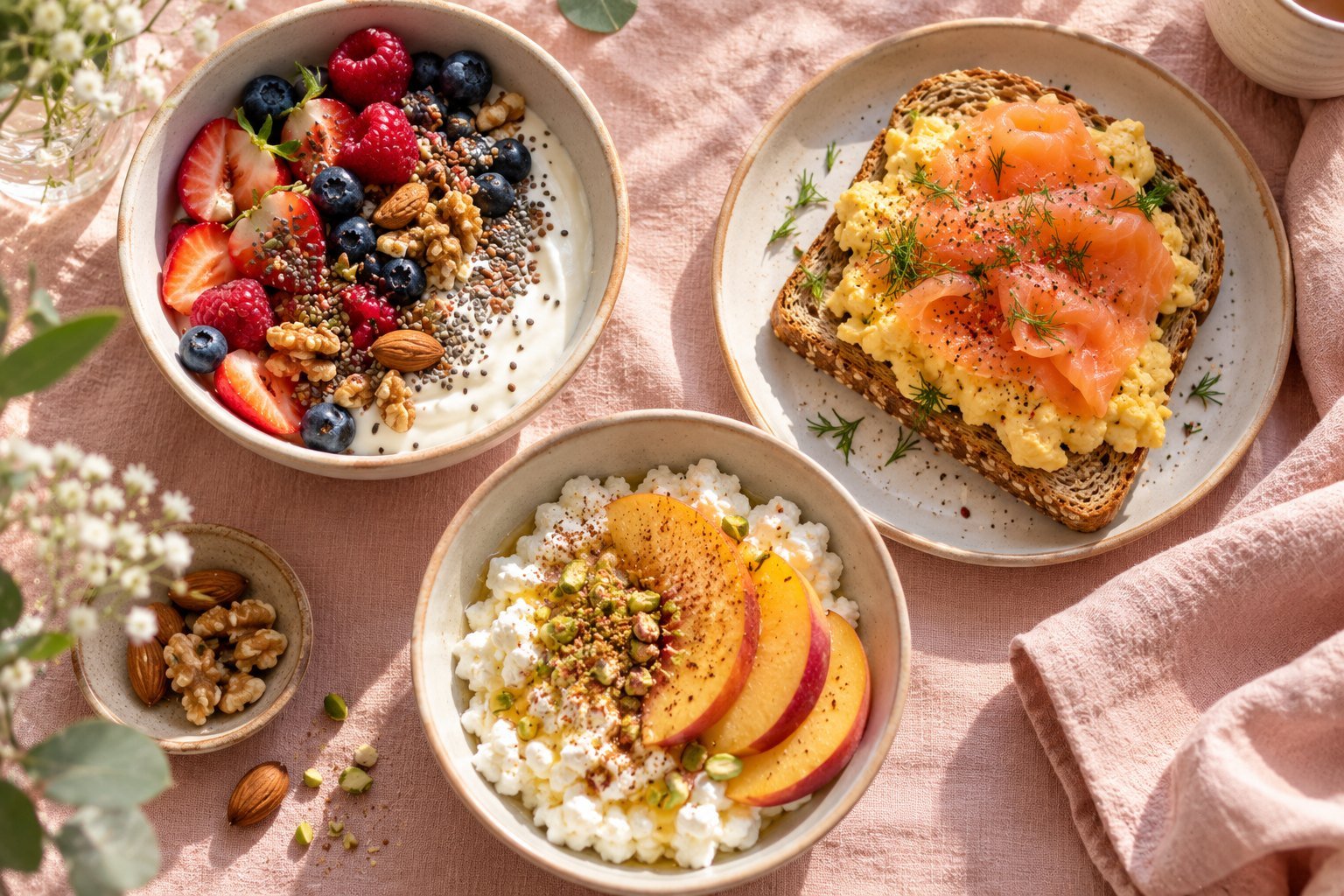
1. Greek yogurt power bowl (about 25–30 g)
250 g of plain Greek yogurt, a handful of berries, 2 tablespoons of hemp seeds and a few chopped nuts.
2. Cottage cheese and fruit (about 25 g)
200 g of cottage cheese with sliced peaches or pineapple, cinnamon and a sprinkle of seeds.
3. Protein smoothie (about 30 g)
250 ml of milk or soy milk, a scoop of protein powder, a banana, a handful of spinach and a spoon of peanut butter.
4. Skyr with granola (about 25 g)
200 g of skyr or high-protein yogurt topped with a small handful of granola and berries.
5. Protein overnight oats (about 25–30 g)
40 g of oats, 150 ml of milk, 100 g of Greek yogurt and half a scoop of protein powder, left in the fridge overnight.
Savoury breakfasts
6. Eggs and smoked salmon on toast (about 30 g)
Three scrambled eggs with 50 g of smoked salmon on a slice of wholegrain toast.
7. Veggie omelette with feta (about 25 g)
Three eggs with spinach, tomatoes, peppers and 30 g of feta.
8. Egg muffins (about 25 g for three)
Bake beaten eggs with chopped vegetables and a little cheese in a muffin tin. Make a batch on Sunday for the week.
9. Avocado toast with eggs and cottage cheese (about 25 g)
Wholegrain toast with avocado, two eggs and 100 g of cottage cheese on the side.
10. Breakfast wrap (about 30 g)
A wholegrain wrap filled with two scrambled eggs, 50 g of chicken or turkey, salsa and spinach.
Plant-based breakfasts
11. Tofu scramble (about 25 g)
200 g of firm tofu scrambled with turmeric, spinach and mushrooms, with a slice of toast.
12. Soy yogurt bowl with seeds (about 20–25 g)
Soy or pea-protein yogurt with hemp seeds, pumpkin seeds and berries. Add a scoop of plant protein to reach 25 g.
13. Beans on toast, upgraded (about 20–25 g)
Baked beans or black beans on wholegrain toast with a side of edamame or a sprinkle of nutritional yeast.
14. Tempeh breakfast bowl (about 25 g)
100 g of pan-fried tempeh with sweet potato, greens and a drizzle of tahini.
15. Peanut butter protein toast (about 20–25 g)
Wholegrain toast with peanut butter and banana, plus a glass of soy milk.
Tips to make high-protein breakfasts easy
- Start with one protein anchor: eggs, Greek yogurt, cottage cheese, tofu or protein powder.
- Prep ahead: overnight oats and egg muffins save time on busy mornings.
- Add a little extra: seeds, nuts, milk instead of water, or a spoon of yogurt on the side.
- Keep fibre in: add fruit, oats, vegetables or wholegrain bread to stay full for longer.
How much protein do you need in total?
A good starting point for active women over 40 is around 1.2–1.6 g of protein per kg of body weight each day, spread over three or four meals. Read our full guide: How much protein do women over 40 need?
Frequently asked questions
Is 30 g of protein for breakfast too much?
No. For most healthy women over 40, 25–35 g at breakfast is a sensible amount. If you have kidney disease, talk to your doctor first.
What’s the easiest high-protein breakfast?
A bowl of Greek yogurt or skyr with berries and seeds takes two minutes and gives you around 25 g.
Are protein powders safe?
Most are fine for healthy adults. Choose one with a short ingredient list and, if possible, third-party testing.
The bottom line
Upgrading your breakfast is one of the simplest changes you can make after 40. Pick two or three favourites from this list and rotate them. For weekly meal planning pages and a grocery checklist, download our free Fit After 40 Starter Kit.