Category: Strength

  • Weight Training for Women Over 40: A Simple 4-Week Plan

    Weight Training for Women Over 40: A Simple 4-Week Plan

    Weight training is one of the best things you can do for your body after 40. It helps you keep muscle, protects your bones, supports a healthy weight and makes everyday life easier. This simple 4-week plan shows you exactly what to do.

    The plan in short: 3 full-body sessions a week (for example Monday, Wednesday and Friday), 5 key moves, 30–45 minutes each. Start light, focus on good form, and make it a little harder each week.

    New to strength training? Read our gentle beginner’s guide first.

    Why weight training matters after 40

    • Muscle: we gradually lose muscle from our 40s, and the hormonal changes of perimenopause can speed this up.
    • Bones: lifting weights helps keep your bones strong as oestrogen falls.
    • Metabolism and weight: more muscle helps you manage your weight and blood sugar.
    • Mood and sleep: regular training can lift your mood and help you sleep better.

    What you need

    A pair of dumbbells (or kettlebell), a sturdy chair or bench and a mat. If you’re new, start with light weights, around 2–5 kg (5–10 lb), and increase as you get stronger. A gym works too, but it isn’t necessary.

    The 5 moves

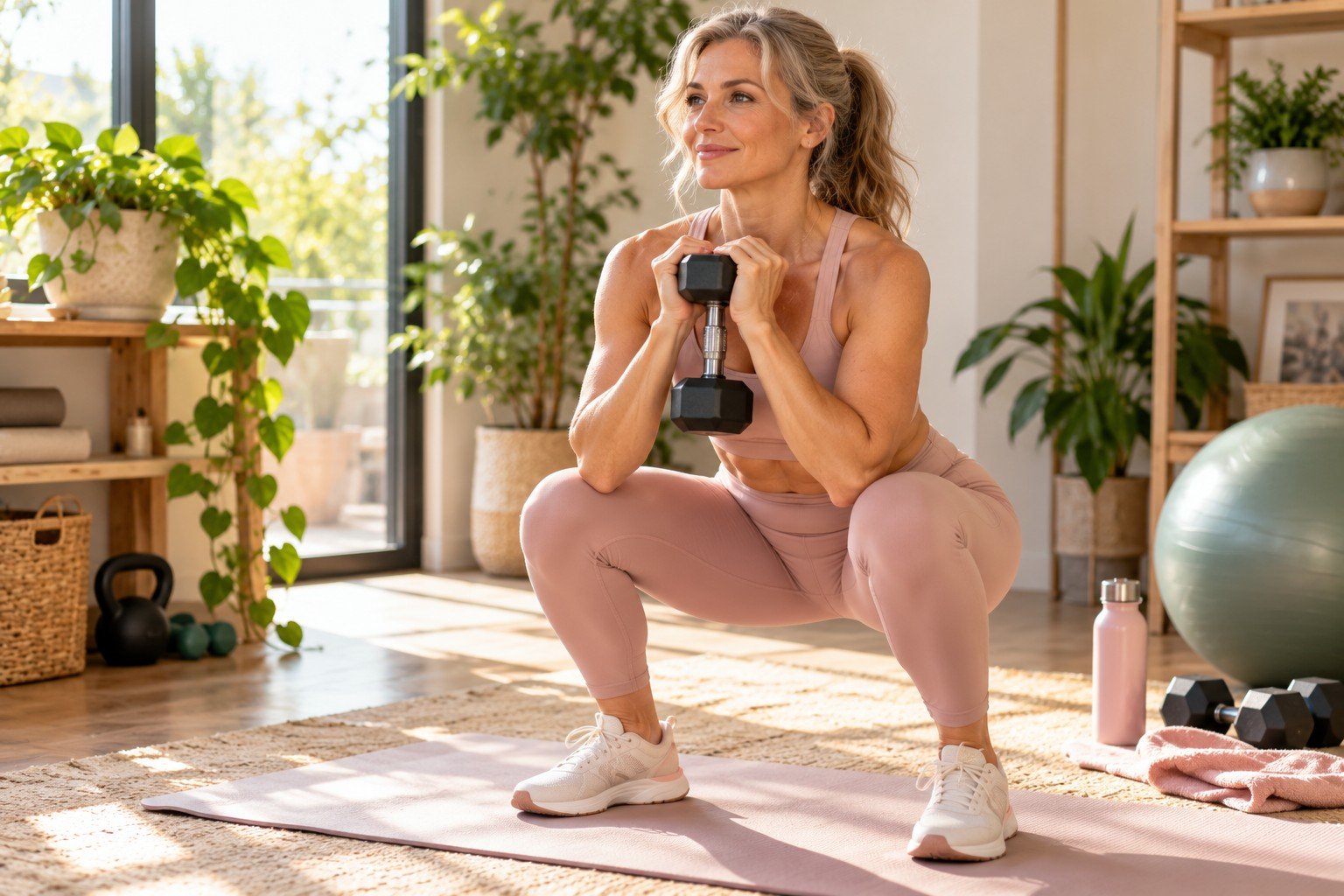
    • Goblet squat: hold one dumbbell at your chest and sit back as if into a chair. Use a real chair behind you to start.
    • Romanian deadlift: hold dumbbells in front of your thighs, push your hips back with a long, flat back, then stand tall.
    • Push-up: start against a wall or kitchen counter, then progress to a low step or the floor on your knees.
    • Dumbbell row: one hand on a bench or chair, pull the dumbbell towards your hip.
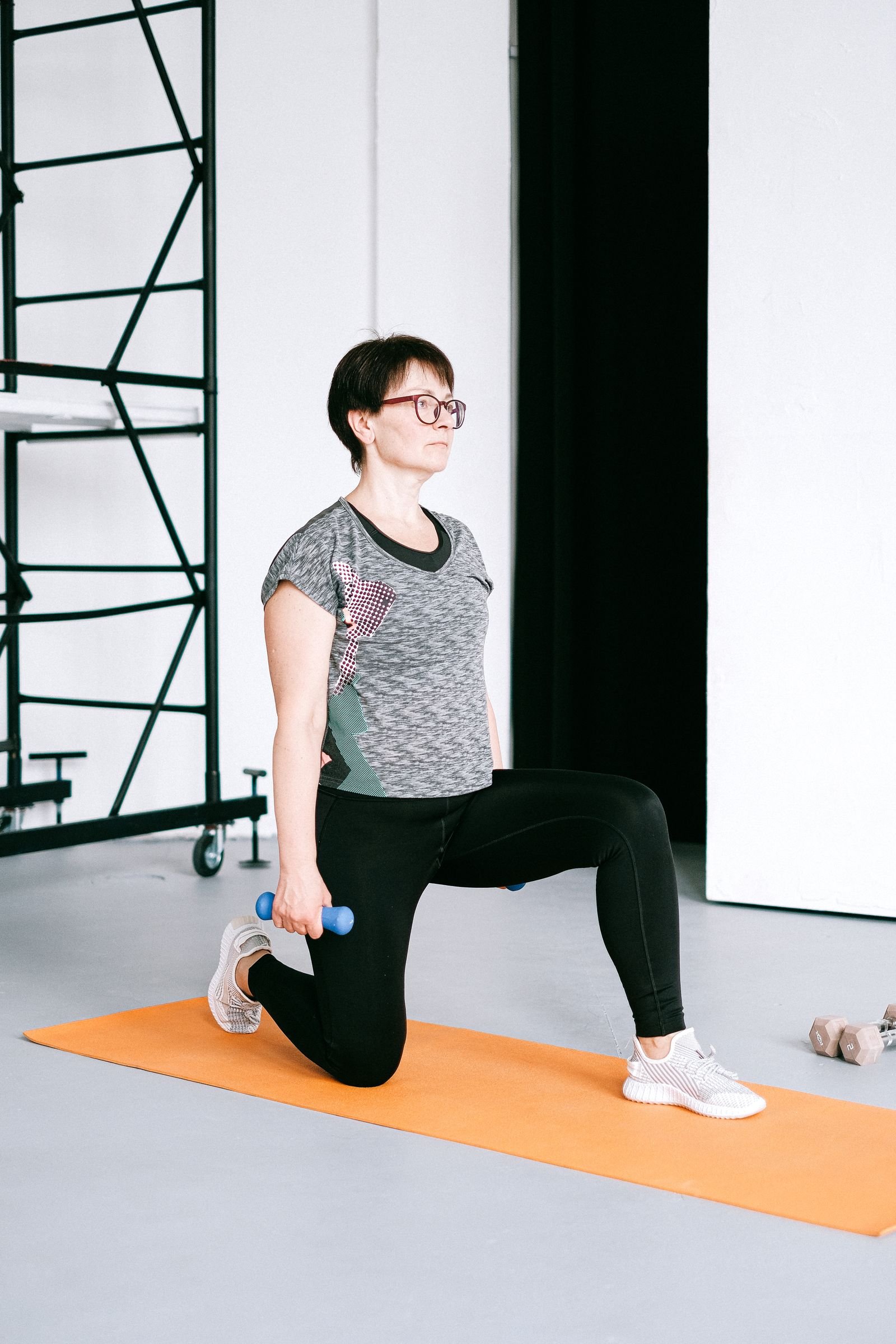
    • Reverse lunge: step back and lower gently. Hold a chair for balance if you need to.

    Warm up first with 5 minutes of brisk walking or marching on the spot, plus a few bodyweight squats and arm circles.

    Your 4-week plan

    Do all 5 moves in each session, resting 60–90 seconds between sets.

    Week 1: Learn the moves

    • 2 sets of 10 reps of each move
    • Choose a weight that feels easy to moderate. Focus on form.

    Week 2: Add a set

    • 3 sets of 10 reps of each move
    • Same weights as week 1 if your form is solid.

    Week 3: Go a little heavier

    • 3 sets of 8–10 reps
    • Increase the weight slightly on the moves that felt easy.

    Week 4: Build strength

    • 3 sets of 8 reps
    • The last 2 reps of each set should feel challenging, while your form stays good.

    How heavy should it feel?

    At the end of each set, you should feel you could do about 2 more reps, but not many more. If you could easily do 5 more, choose a heavier weight next time. If your form breaks down, go lighter.

    After week 4

    Keep going with the same 5 moves, adding a little weight or a few reps every week or two. This slow, steady increase, called progressive overload, is what builds strength over time. Every 6–8 weeks, take an easier week with lighter weights to recover.

    Tips for success

    • Eat enough protein: aim for about 25–35 g at each meal. Try these high-protein breakfasts.
    • Walk on your rest days. Our 30-day walking plan fits perfectly.
    • Track your weights in a notebook so you can see your progress.
    • Consider creatine: it can boost your results. Read creatine for women over 40.
    • Listen to your body: muscle soreness is normal at first, but sharp pain isn’t. Stop and get advice if something hurts.

    Frequently asked questions

    Will lifting weights make me bulky?

    No. Building noticeable muscle takes years of focused training. Most women find they look leaner, more toned and stronger.

    How many days a week should women over 40 lift weights?

    Two to three full-body sessions a week is ideal for most women. Even twice a week brings real benefits.

    Is it safe to start weight training at 50 or 60?

    Yes, for most women. Start light and get advice from your doctor or a qualified trainer if you have a health condition, joint problem or osteoporosis.

    The bottom line

    You don’t need hours in the gym. Three short sessions a week, five simple moves and a little patience will make you stronger in a month. For a complete, week-by-week 8-week programme with nutrition guidance, see Strong Through Perimenopause.

    This article is for general information only and isn’t medical advice. Check with your doctor before starting a new exercise programme.

  • Walking for Weight Loss After 40: A Simple 30-Day Plan

    Walking for Weight Loss After 40: A Simple 30-Day Plan

    Walking is one of the simplest, kindest ways to move your body after 40. It’s free, it’s easy on your joints, and it fits into almost any day. But can walking actually help you lose weight? Here’s what really works, plus a 30-day plan to get you started.

    In short: yes, walking can help with weight loss, especially when you walk most days, gradually build up your time and pace, and combine it with strength training and enough protein.

    Does walking help you lose weight?

    Walking burns calories, and the more you walk, the more you burn. Just as importantly, it helps in ways the scale doesn’t always show: it supports blood sugar control, lowers stress, improves sleep and boosts your mood, all of which make healthy eating easier.

    Walking on its own usually leads to modest weight loss. It works best as part of a bigger picture:

    • Walking for daily movement and heart health
    • Strength training twice a week to keep and build muscle. See our beginner’s guide.
    • Enough protein to protect your muscles and keep you full. Try these high-protein breakfasts.
    • Good sleep, which helps control appetite and cravings

    How much should you walk?

    Health guidelines recommend at least 150 minutes of moderate activity a week, for example 30 minutes on five days. A brisk pace, where you can talk but not sing, counts as moderate. Many studies link around 7,000–9,000 steps a day with real health benefits, but any increase from where you are now is worth it.

    Your 30-day walking plan

    Walk at a comfortable pace to warm up for the first five minutes, then pick up the pace. If you’re new to exercise, repeat a week before moving on.

    Week 1: Build the habit

    • Walk 15–20 minutes, five days this week
    • Keep it comfortable, and focus on simply getting out the door

    Week 2: Add a little pace

    • Walk 20–25 minutes, five days this week
    • On two of those walks, add 3 × 2 minutes of brisk walking

    Week 3: Go a little longer

    • Walk 25–30 minutes, five or six days this week
    • Add one walk with a hill or some stairs
    • Try one longer walk of 40 minutes at the weekend

    Week 4: Make it yours

    • Walk 30–40 minutes, five or six days this week
    • Include intervals on two walks: 1 minute fast, 2 minutes easy, repeated five times
    • Keep your long weekend walk

    Tips to get more from every walk

    • Walk after meals: a 10–15 minute walk after eating can help with blood sugar.
    • Swing your arms and stand tall to walk faster and more comfortably.
    • Find a walking buddy or a podcast you love to make it something to look forward to.
    • Wear supportive shoes and replace them when the soles wear down.
    • Add a weighted backpack later (rucking) once walking feels easy, starting light.
    • Track your progress with a step counter or a simple tick on a calendar.

    Walking during perimenopause

    Walking is especially helpful during perimenopause. It can lift your mood, ease stress and help you sleep. On days when you feel exhausted, a short, gentle walk still counts, so be kind to yourself.

    Frequently asked questions

    Is walking enough to lose belly fat?

    You can’t choose where you lose fat, but regular walking, combined with strength training, enough protein and good sleep, can help reduce overall body fat, including around your middle.

    Is it better to walk fast or long?

    Both help. Longer walks build endurance, while brisk walking and intervals boost fitness. A mix of both works well.

    Should I walk every day?

    Daily walking is safe and helpful for most women. If you’re managing an injury or health condition, check with your doctor first.

    The bottom line

    You don’t need intense workouts to change how you feel. Start with 15 minutes, build up slowly, and pair your walks with strength and protein. Our free Fit After 40 Starter Kit includes a printable 30-day walking plan and habit tracker to keep you on track.

  • Strength Training After 40: A Gentle Beginner’s Guide

    Strength Training After 40: A Gentle Beginner’s Guide

    If you’ve never lifted weights, or it’s been years, strength training can feel intimidating. The good news? You don’t need a gym, heavy barbells or hours of free time. Two short sessions a week are enough to start feeling stronger.

    Why strength training matters now

    After 40, muscle and bone both become harder to maintain. Regular strength training helps you keep them, which means more energy, better balance, stronger bones and an easier time managing your weight. It also makes everyday life easier: carrying shopping, climbing stairs, lifting grandchildren or getting up off the floor.

    Start with four simple movements

    Almost every useful exercise is a version of one of these four patterns:

    • Squat: sitting down and standing up. Start with a chair squat.
    • Hinge: bending at the hips, as you would to pick something up. Start with a glute bridge or a light hip hinge.
    • Push: pushing something away. Start with wall or countertop push-ups.
    • Pull: pulling something towards you. Start with a resistance-band row.

    Do two or three sets of 8–12 repetitions of each, twice a week, with at least one rest day in between. A whole session can take 30–40 minutes including a gentle warm-up.

    How heavy should it feel?

    Choose a weight or version of the exercise where the last two or three repetitions feel challenging, but your technique stays good. A simple way to judge it: at the end of each set, you should feel that you could have done about two more, but not many more.

    Make it a little harder over time

    Your body gets stronger when you slowly ask it to do a bit more. Once you can do 12 good repetitions in every set, make it slightly harder next time: add a little weight, slow the movement down or move to a harder version, such as from wall push-ups to countertop push-ups.

    A simple first week

    • Day 1: chair squats, glute bridges, wall push-ups and band rows (2 sets each)
    • Days 2–3: rest, or an easy 20–30 minute walk
    • Day 4: repeat Day 1, aiming for one or two more repetitions
    • Days 5–7: walks and gentle stretching

    Listen to your body

    Some muscle soreness a day or two after training is normal at first. Sharp pain is not. Stop if something hurts, and if you have a health condition, an injury or you’re unsure, check with your doctor or a qualified trainer before you begin.

    The bottom line

    Strength isn’t built in one big effort. It’s built by ordinary weeks done consistently. Start small, keep it simple and let the results surprise you.