If you’ve tried eating less and less as your body changes in your 40s and 50s, you’re not alone, and you’ve probably found it leaves you tired, hungry and frustrated. The best menopause diet isn’t about restriction. It’s about giving your changing body more of what it needs.
In short: build your meals around protein, fibre-rich plants, healthy fats and calcium-rich foods. Aim for around 25–35 g of protein per meal, fill half your plate with vegetables, and go easy on alcohol, sugary drinks and ultra-processed foods. A Mediterranean-style way of eating is a great model.
Why your diet needs to change during menopause
As oestrogen falls during perimenopause and menopause, several things shift at once: you lose muscle more easily, fat tends to move towards your middle, bones become more fragile and your risk of heart disease goes up. Eating well can’t stop these changes, but it can make a real difference to how you feel and how your body copes.
The 7 building blocks of a menopause diet
1. Protein at every meal
Protein helps protect your muscles, keeps you full and supports a healthy weight. Aim for around 25–35 g per meal from eggs, Greek yogurt, fish, chicken, tofu, beans and lentils. Find out how much protein you need.
2. Plenty of fibre
Vegetables, fruit, whole grains, beans and lentils feed your gut, help control blood sugar and keep you satisfied. Most women eat far less than the recommended 25–30 g a day.
3. Calcium and vitamin D for your bones
Bone loss speeds up after menopause. Include calcium-rich foods such as dairy, fortified plant milks, tofu made with calcium, canned fish with bones and leafy greens. Vitamin D, from sunlight and foods like oily fish and eggs, helps your body use calcium. Ask your doctor whether you need a vitamin D supplement.
4. Healthy fats
Olive oil, nuts, seeds, avocado and oily fish like salmon and sardines support your heart and help you feel full. Aim for oily fish once or twice a week.
5. Soy and other plant foods
Soy foods like tofu, edamame and soy milk contain plant compounds called isoflavones. Some studies suggest they may slightly reduce hot flashes for some women, and they’re a great source of protein.
6. Smart carbs
You don’t need to cut carbs. Choose slow-releasing ones like oats, whole grains, potatoes with skin, beans and fruit, and pair them with protein to keep your energy steady.
7. Hydration
Drink water regularly through the day. It supports energy and digestion, and can help on days with hot flashes.
Foods to limit
- Alcohol: it can worsen hot flashes and disturb sleep, and adds calories without filling you up.
- Sugary drinks and sweets: they can cause energy crashes and cravings.
- Ultra-processed foods: crisps, biscuits and ready meals are easy to overeat and low in nutrients.
- Very salty foods: important for heart health as your risk rises.
- Caffeine late in the day, if it affects your sleep or triggers hot flashes.
A simple menopause diet sample day
- Breakfast: Greek yogurt with berries, oats and seeds (about 25–30 g protein). More ideas in our 15 high-protein breakfasts.
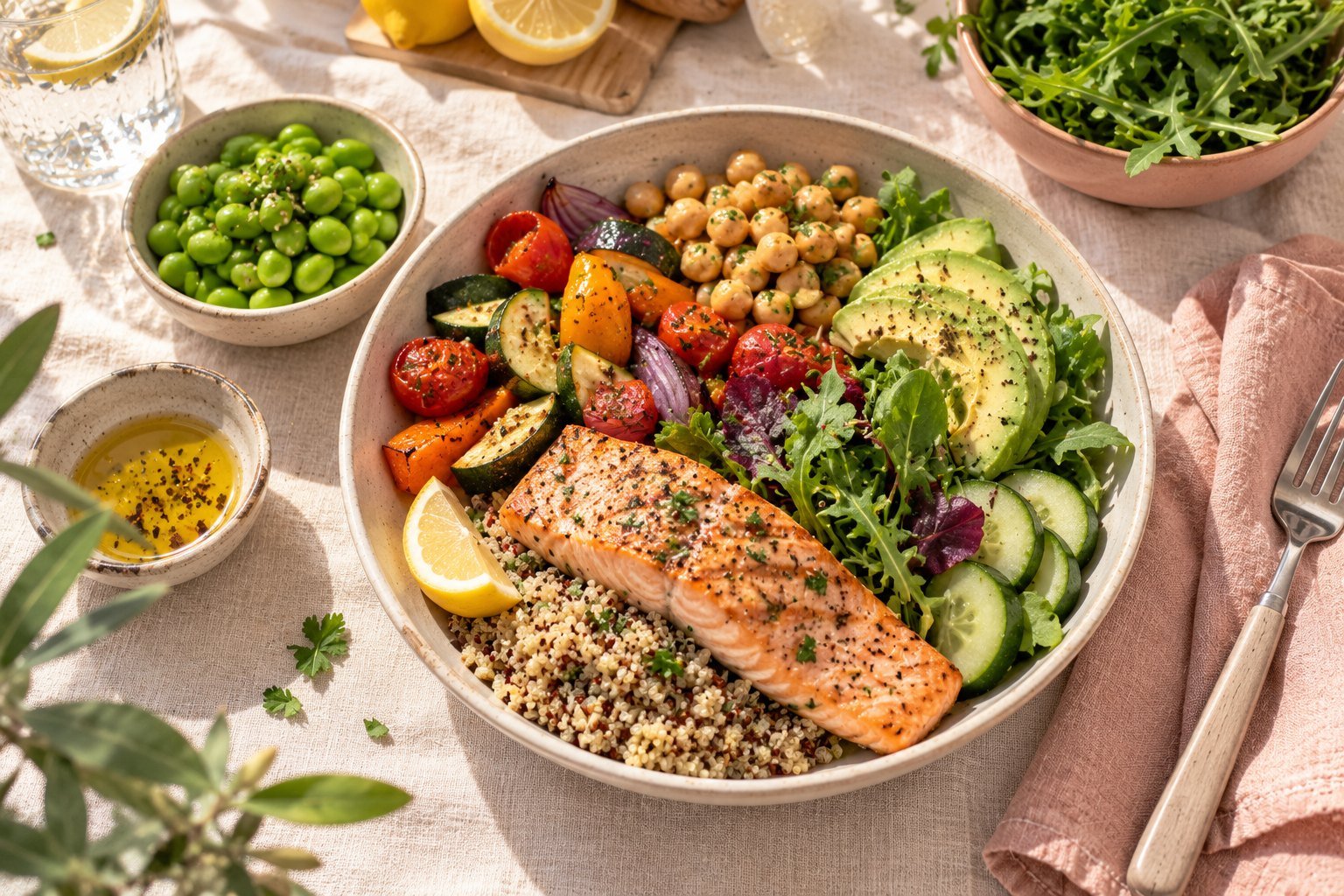
- Lunch: a big salad bowl with salmon or chickpeas, quinoa, roasted vegetables, leafy greens, avocado and olive oil.
- Snack: an apple with a handful of almonds, or a small bowl of edamame.
- Dinner: chicken or tofu stir-fry with plenty of vegetables and brown rice.
- Evening (if hungry): a glass of milk or a small pot of cottage cheese.
Does a menopause diet help with weight?
It can. Eating enough protein and fibre helps you feel full on fewer calories, while protecting your muscles. Combine it with strength training, daily walks and good sleep for the best results. Read more about perimenopause weight gain and what helps.
Frequently asked questions
Is intermittent fasting good during menopause?
It works for some women but isn’t necessary. If skipping meals makes it hard to eat enough protein, or leaves you tired and craving sugar, regular balanced meals are a better choice.
Should I go low-carb in menopause?
You don’t need to. Focus on the quality of your carbs and pair them with protein and fibre.
What’s the best diet for menopause belly fat?
There’s no diet that targets belly fat specifically, but a protein-rich, high-fibre, Mediterranean-style diet with less alcohol and processed food, combined with strength training, can help reduce overall body fat, including around your middle.
The bottom line
The best menopause diet is one you can enjoy for life: plenty of protein, colourful plants, healthy fats and foods that support your bones and heart. Small, steady changes add up. Our free Fit After 40 Starter Kit includes a weekly meal planner and grocery checklist to help you get started.
This article is for general information only and isn’t medical or dietary advice. If you have a medical condition, speak to your doctor or a registered dietitian.