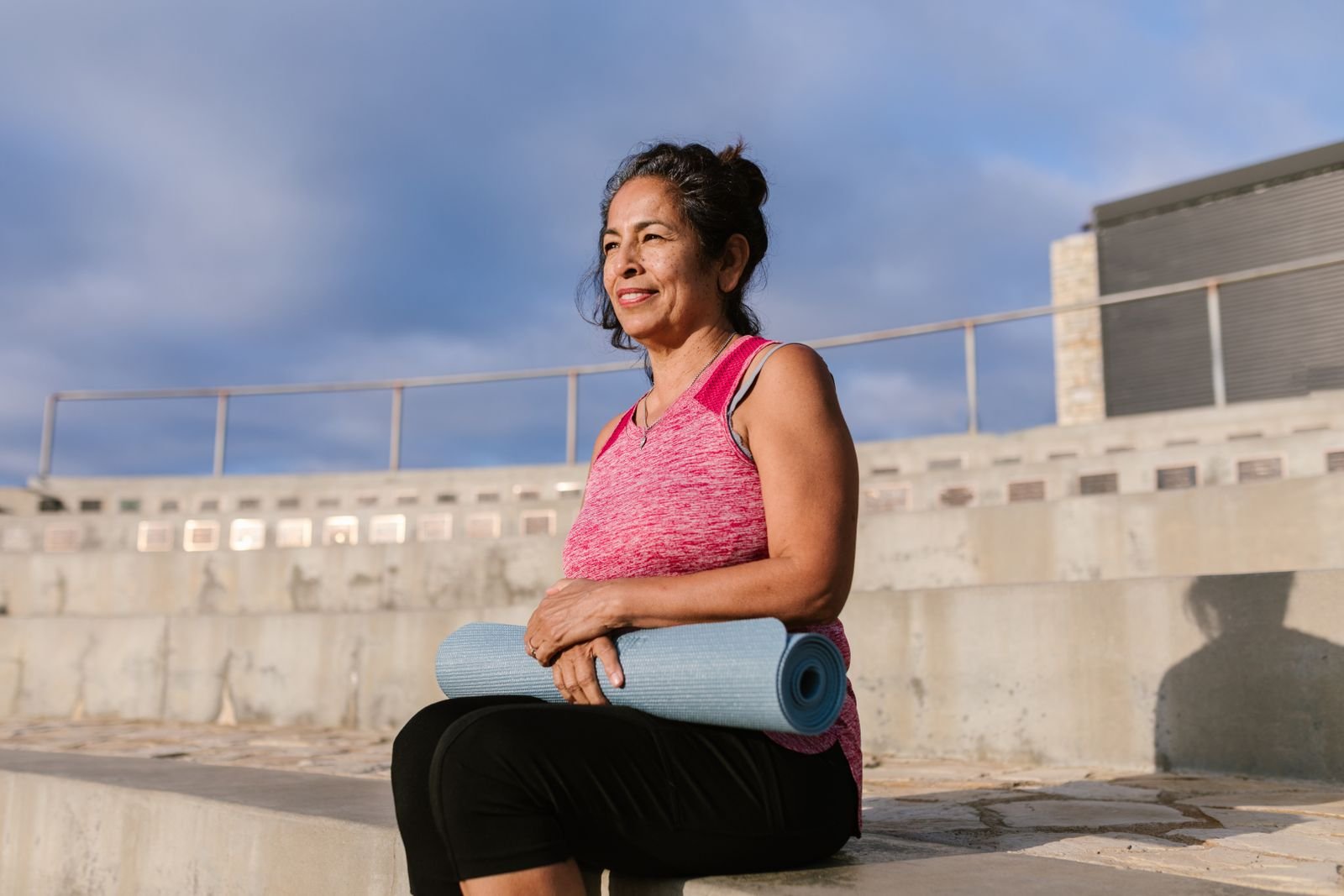
You’re eating the same, moving the same, and yet the scale is creeping up, especially around your middle. If that sounds familiar, you’re not imagining it, and it’s not a lack of willpower.
What’s happening in your body
Perimenopause is the transition before menopause, and it often begins in your 40s. As hormone levels, especially oestrogen, rise and fall less predictably, several things can change at once:
- Where you store fat: lower oestrogen tends to shift fat storage towards the tummy.
- Muscle: we naturally lose muscle with age, and less muscle means your body uses a little less energy each day.
- Sleep: night sweats and broken sleep are common, and poor sleep can increase appetite and cravings.
- Stress and energy: busy lives, low energy and mood changes can make old routines harder to keep.
What actually helps
The answer usually isn’t eating less and less or doing hours of cardio. That often leaves you tired, hungry and losing muscle. These habits tend to work better:
1. Strength train twice a week
Keeping and building muscle is one of the most helpful things you can do. Two short full-body sessions a week are enough to start.
2. Eat enough protein
Protein helps protect muscle and keeps you fuller for longer. Aim for a good source at every meal, roughly 25–35 g.
3. Walk most days
Walking is gentle, easy to fit in and great for your heart, mood and blood sugar. Build up gradually to a daily step count that feels achievable for you.
4. Protect your sleep
Keep a regular bedtime and a cool bedroom, and limit caffeine after midday. If night sweats are keeping you awake, talk to your doctor.
5. Fill up on fibre and colour
Vegetables, fruit, beans, lentils and whole grains support digestion and help you feel satisfied.
6. Go easy on alcohol
Alcohol can disrupt sleep, trigger hot flushes and add calories without making you feel full.
When to talk to your doctor
If your symptoms are affecting your daily life, or you’d like to talk about options such as hormone therapy, book an appointment with your GP. A doctor can also check for other causes of weight change, such as thyroid problems.
The bottom line
Your body is changing, so your approach can change too. Focus on strength, protein, movement and rest, and judge your progress over weeks, not days. Be patient and kind with yourself. This chapter can be a strong one.