Probably more than you’re eating now, and spread differently across your day. If you’ve noticed that you feel weaker, recover more slowly or seem to lose shape even though you eat well, protein is one of the first things worth looking at.
Key takeaways: a good everyday starting point for active women over 40 is around 1.2–1.6 g of protein per kg of body weight. Aim for roughly 25–35 g at each main meal, and give breakfast extra attention, because that’s where most women fall short.
Why protein matters more after 40
From our late 30s onwards we gradually lose muscle unless we do something to keep it. In perimenopause, falling oestrogen seems to make muscle a little less responsive to both exercise and protein. Researchers call this anabolic resistance: the same small portions that worked at 30 may simply not be enough any more.
Muscle isn’t only about looking toned. It keeps you strong for everyday life, supports your balance and bones, and helps you manage your weight. Protecting it is one of the kindest things you can do for your future self.
Work out your daily number
Multiply your weight in kilograms by 1.2 and by 1.6. That gives you a sensible daily range. For example:
- A woman who weighs 60 kg would aim for roughly 72–96 g a day
- A woman who weighs 70 kg would aim for roughly 84–112 g a day
- A woman who weighs 80 kg would aim for roughly 96–128 g a day
If you strength train, aim for the upper half of your range. You don’t need to be precise to the gram. Getting roughly into the range most days is what makes the difference.
Spread it across the day
How you spread protein matters almost as much as the total. Muscle responds best to a decent dose at each meal, rather than a small breakfast, a light lunch and a big dinner. Aiming for about 25–35 g, three or four times a day, is a simple pattern that works for most women.
Easy ways to get 25–35 g at a meal
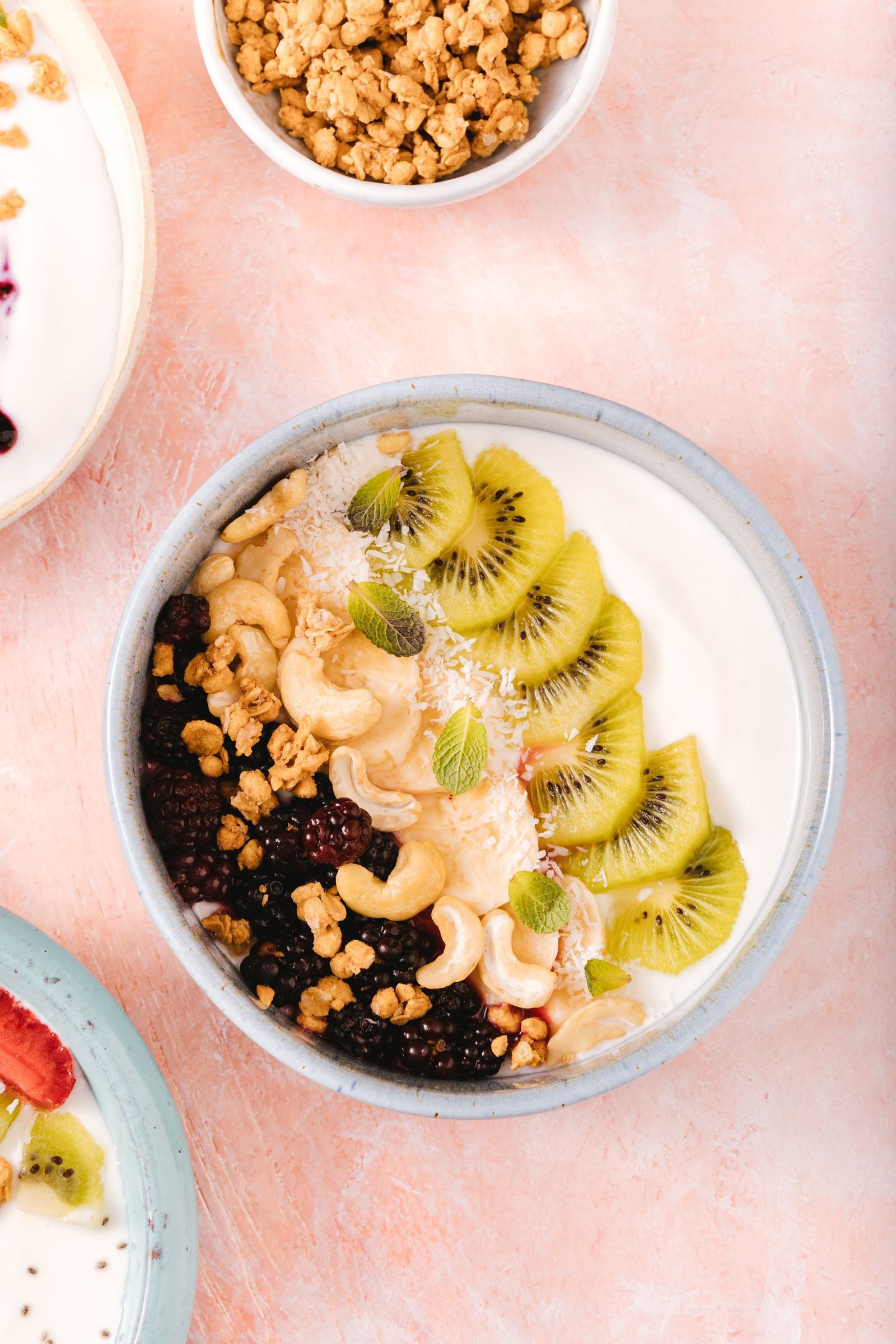
- 200 g of Greek yoghurt with nuts and berries (about 20–25 g)
- Three eggs with a slice of wholegrain toast and smoked salmon (about 25–30 g)
- A chicken breast with vegetables and rice (about 30–35 g)
- A large bowl of lentil soup with a portion of tofu or cheese (about 20–25 g)
- A protein smoothie with milk, a scoop of protein powder and a banana (about 30 g)
Breakfast: the easiest win
Toast, a pastry or a bowl of cereal often gives you less than 10 g. Swapping to eggs, Greek yoghurt or cottage cheese can add 15–20 g to your day before you even leave the house, and many women notice they feel fuller for longer, too.
A word of caution
If you have kidney disease or any other medical condition, talk to your doctor before increasing your protein intake. This article is for education and isn’t personal medical advice.
The bottom line
You don’t need a complicated diet. Find your number, add a good source of protein to every meal, and pair it with two short strength sessions a week. Small, steady changes are what help you feel strong again.